
Bare-it-all Launch Report (written in 2016!):
How I made $7429 in 8 days with a list of less than 100 people and a $99 product
I for one, don’t really get excited hearing about a 6-figure launch of someone who has been around for a while, has an email list of 10,000, a Facebook group of 10,000 people, and hundreds or even thousands of clients already. Once you reach a certain critical mass, the growth is exponential it seems, but the majority of people are struggling to reach that point, and would be happy with any profitable launch, even a 3-figure one…
This post is about my 4-figure launch, that I, personally, consider hugely successful.
Let me give you some background first…
I am a serial entrepreneur who never worked for anyone else. I have had some very successful businesses over the years (as well as ones that were just OK or didn’t really take off at all), and have been building my businesses online since 2003 so all of this is not new to me. I am also quite techie so that aspect of my entrepreneurial journey has never been an issue for me. However, my products have usually been physical products and I never really did an official “launch” for a digital/service product so this launch was my first serious attempt at that.
The launch was part of my No Hassle brand. My main product is called No Hassle Website and it is a $99 evergreen product that is available on my website at any time. I recently developed a second No Hassle product called No Hassle Membership & Course Platform and was planning on adding it to the website and selling it as an evergreen product as well.
Enter: Sold Out Launch (SOL) by Bushra Azhar
I can write and tell you about Bushra all day, but that’s not why we have gathered here today, so I will just tell you in short that Bushra is my favorite online person (which I have had the pleasure of meeting and befriending in person as well), and she is ridiculously smart and funny. She has a unique launch framework called Sold Out Launch (www.soldoutlaunch.com/join) and Bushra and her SOL product inspired me to do an actual launch for my product and offer it only for a short time, instead of as an evergreen product. I used the SOL framework to design my own launch.
I started the No Hassle business 6 months before the launch, and at the time I launched I had no email list, less than 100 customers, about 60 (customers) in my Facebook support group, a Facebook business page with less than 100 Likes and 58 un-engaged people who downloaded a couple of freebies I offered in the last 6 months.
But, and this is an important but – I had a few important things going for me: My products were outrageously unique and awesome ;-), I had a few dozen customers already, some of which asked me to develop the launch product and were eager to get it, and I was very active and “known” in a few Facebook groups I love.
I really really wanted the launch to be successful and to do things right and I knew I had to build a list as part of my launch, or I will be launching to the sound of crickets!
Pre-Launch
I estimate that I prepared 80% of what I needed for the launch in advance, before I actually started the launch. I also had my product all ready, which is not always the case, but for me was very important.
I started my launch with 2-3 weeks of just being uber-visible in my favorite groups, even ones that don’t allow any promotions, links etc. I did it by doing the following things:
- I actively posted/answered/helped several times a day, every day, in the 3-4 groups I like. I went above and beyond in many cases, even doing zoom calls, chats etc. I had zero agenda other than helping people and increasing my visibility. I helped and answered questions that had nothing to do with my product (for example, I often help with Facebook ads and with WordPress and other tech-related questions so I searched for those subjects inside the groups).
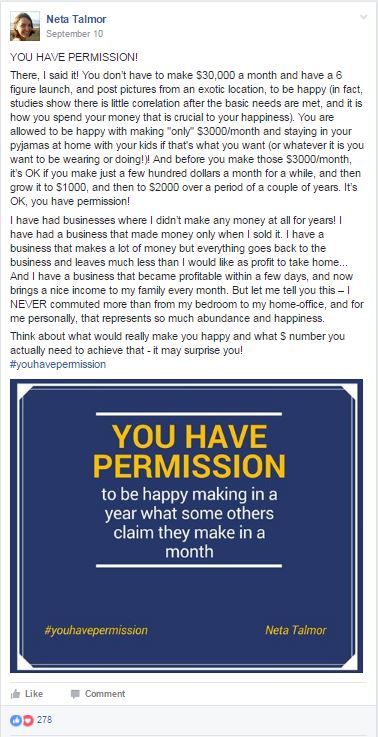
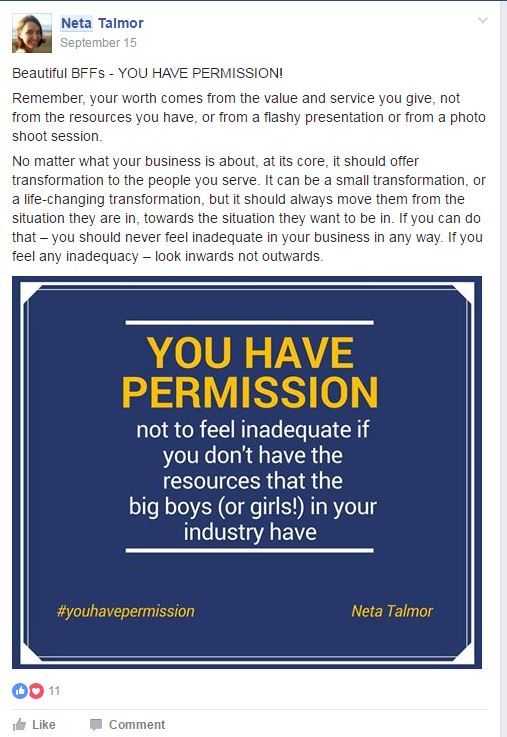
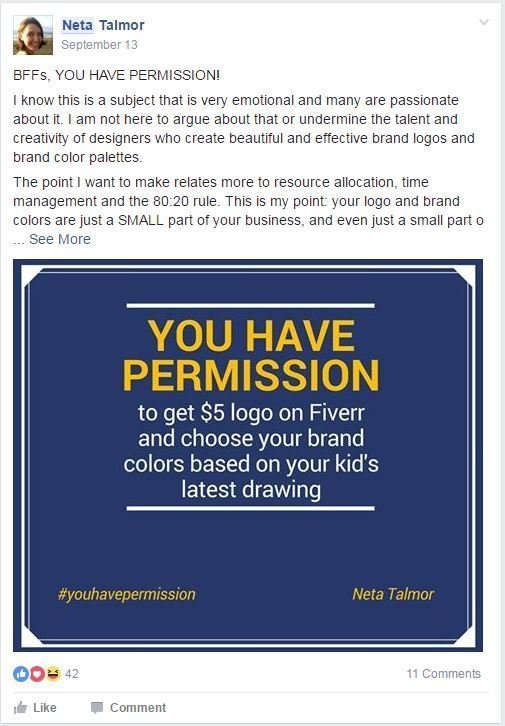
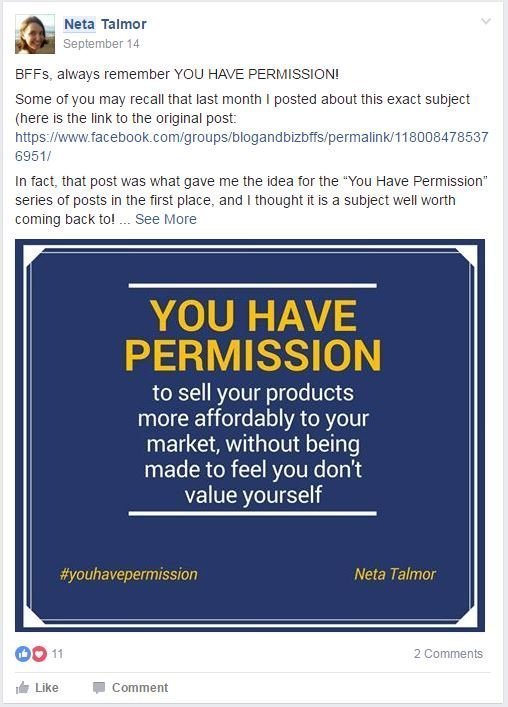
- I created a series of social media posts (see some examples below), and posted them daily in the group. These posts reflected my personal and brand philosophy, without ever mentioning my brand. I specifically chose controversial subjects and took a very specific stand about the subject, usually against what is considered the mainstream position. I called this series of posts “You have permission…” and because I did it every day for about 9 days, people started to expect and wait for them daily. One of the posts got over 270 likes and resonated with many people, while others got between 10-40 likes.
- I prepared my personal Facebook profile and Facebook business page to have links to my website, and to the sign ups related to the launch.
- I created a VIP waiting list page.
In addition, I wrote what I thought was a great blog post related indirectly to my product, and started promoting it so I can retarget those visitors with Facebook ads later, but it had too few visitors, so I gave up on that pretty quickly. I understood that would not help me grow my list and had to come up with a much better idea, quickly.
At that point, a client mentioned a challenge she just participated in, and I immediately fell in love with the idea and decided I would do my own 5-day challenge as the main strategy to build my list and attract my ideal customers for the launch product.
The 5-Day Membership & Course Strategy Challenge
The concept and logic behind doing the challenge –
- Give REAL, necessary, substantial, value. Resolve an actual, immediate problem my ideal customer has (in my case the problem is that my ideal customer wants to create an online course or membership site and needs to bring their idea from their own head to their customers). I chose 5 days because it is long enough to sustain interest but not too long to have people quit and give up. I knew I wanted to over-deliver and create a challenge that is good enough to be considered a paid mini-course.
- The challenge allows me to interact and engage with my audience in a very intense and ideal situation, where I can show my knowledge, personality and philosophy in a very natural way.
- It naturally leads to my product. My product was the obvious next step. But at the same time, the 5-Day Challenge was a standalone “product” that can give a solution regardless of if anyone ever buys my product. I designed it so that it is even intended for people who already have a solution and don’t need my product.
- While I was not promoting or even mentioning my launch product until just 2-3 days into the challenge, I did not hide it, and there were people who were aware of it and talked about it. Because I gave so much value in the challenge and it was beneficial regardless of my product, I didn’t have a problem talking about it, introducing it, or “pitching” it as it didn’t feel sleazy or salesy at all. I already gave so much and the challenge so naturally led to it, that by the time I started talking about the product, it came very organically.
Facebook Ads for the Challenge
Budget: I ended up spending CAD$1099 (=USD$850) in 11 days.
Audiences: I installed a Facebook tracking pixel 6 months earlier on my website, so there was some data, but not enough. I experimented, and created relatively narrow audiences to target my ads to.
At the end, the best performing audiences were:
1. Lookalikes of people who signed up for the challenge (as soon as I had enough to create a lookalike audience)
2. Visitors to my websites in the last 180 days, people who signed up for my VIP list and customer list.
The ad: I actually did not tweak the ad itself much at all, I focused more on the audiences.
I used a carousel ad, which is totally under-used in my opinion. The advantage of a carousel ad is that you can tell a whole story, almost like a mini sales letter, and can do a lot of unique things visually. I used a very bright and unique colorful background (I got a lot of positive feedback on that!), and added another piece of the puzzle of why they should join the challenge, on each of the images.
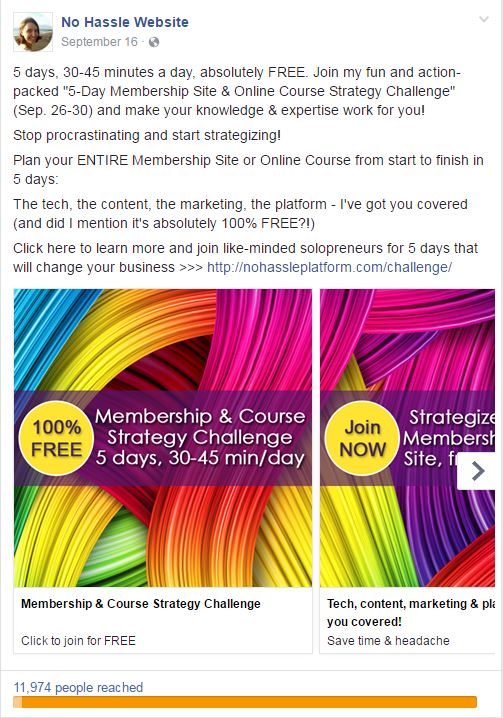
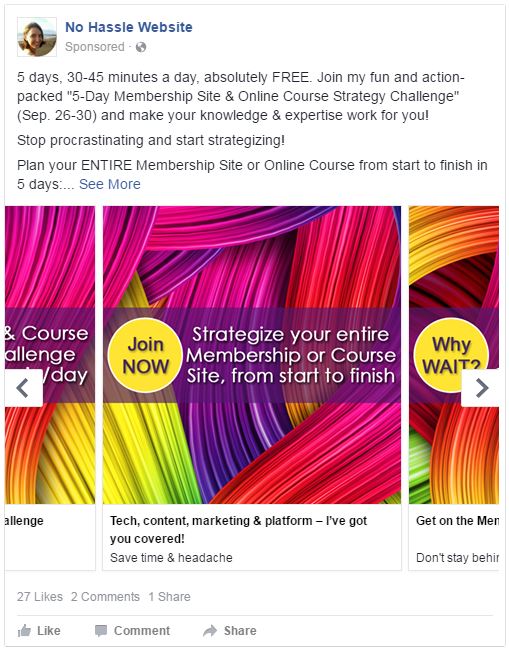
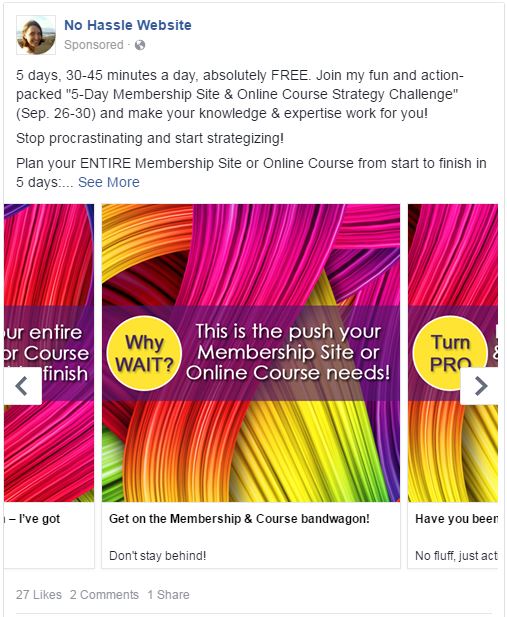
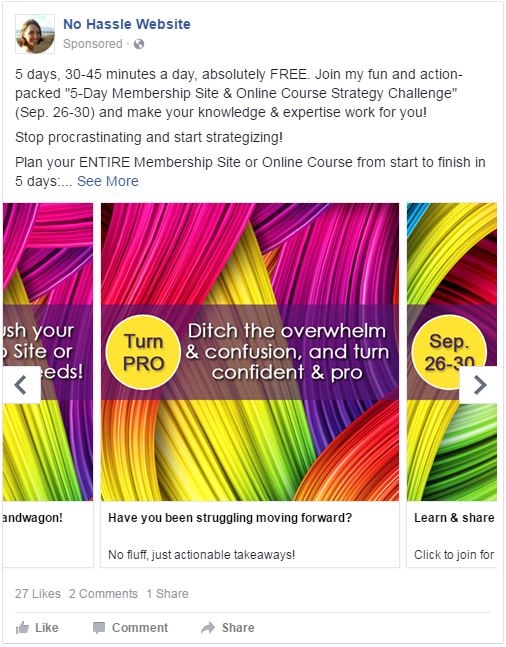
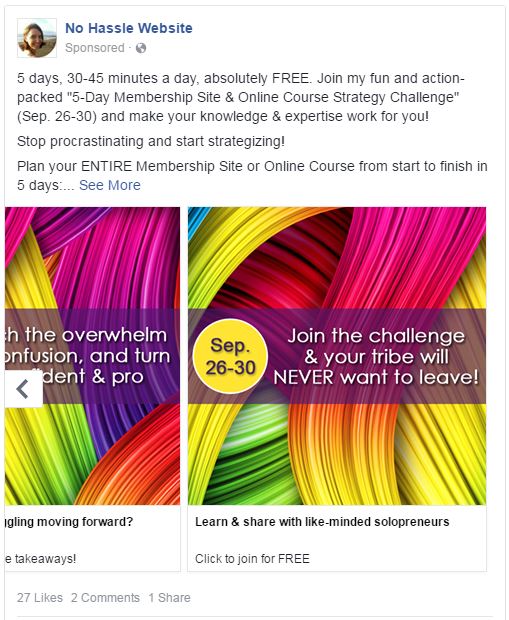
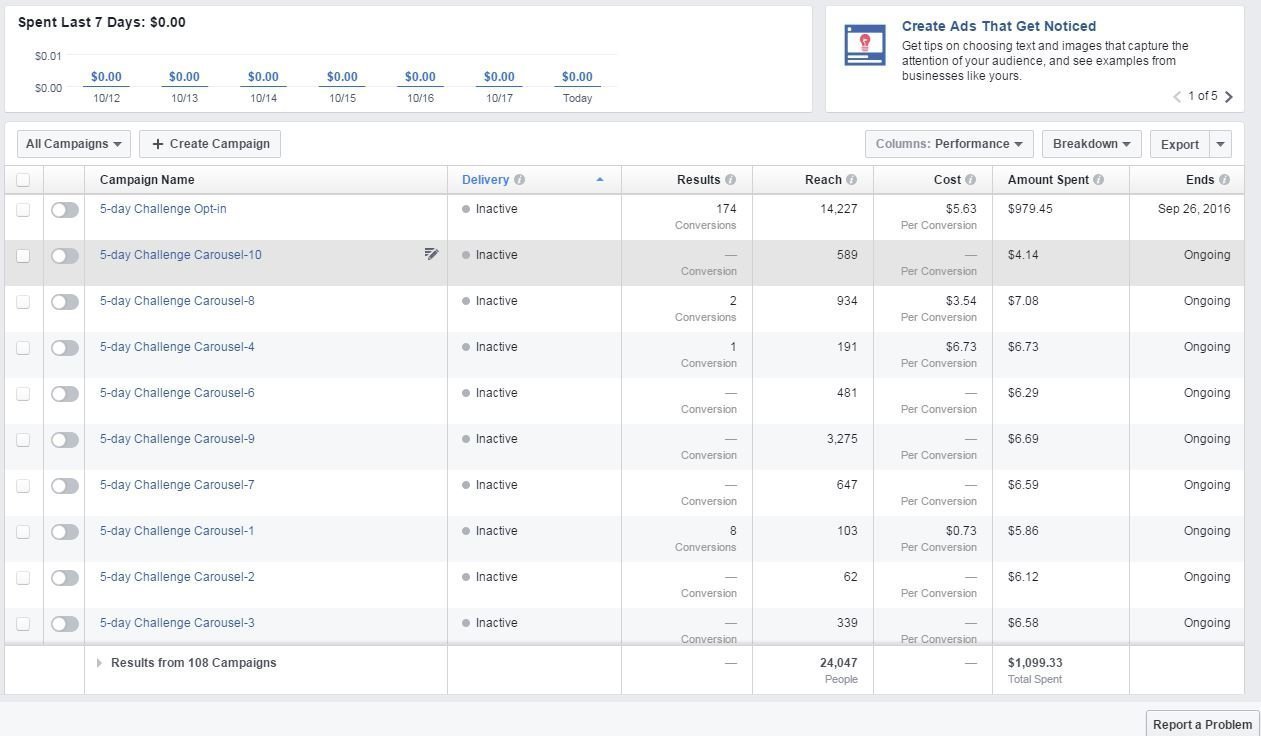
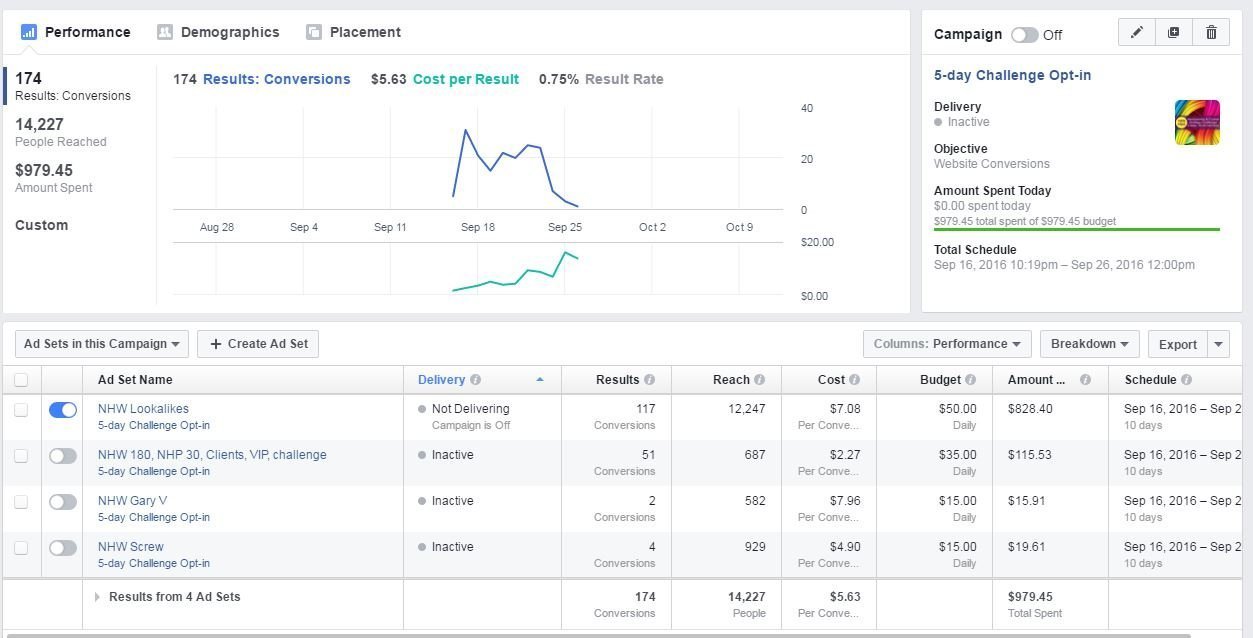
Results: I got 174 sign-ups through the ads that I kept running for CAD$5.63/conversion (USD$4.30) for a total of CAD$979 (=USD$747). So about CAD$120 went on experimenting with ads, ads that didn’t work etc.
Let’s talk conversion costs:
Forget about $1 conversions! It’s a myth at this point, at least for beginners. If it is at all possible, it is only after you have a very large list, custom audiences based on customers, previous FB conversions etc.
Facebook ads are an amazing tool and can be very effective, but they also offer a double “Catch 22” – you need an audience in the first place to grow your audience, and you need to spend a lot of money to get your costs down! And remember, $1/conversion and $100/conversion don’t mean anything – all that matters is how many of your sign ups convert into paying customers and the ROI on that. In my case, it was well worth it.
Free Marketing for the Challenge
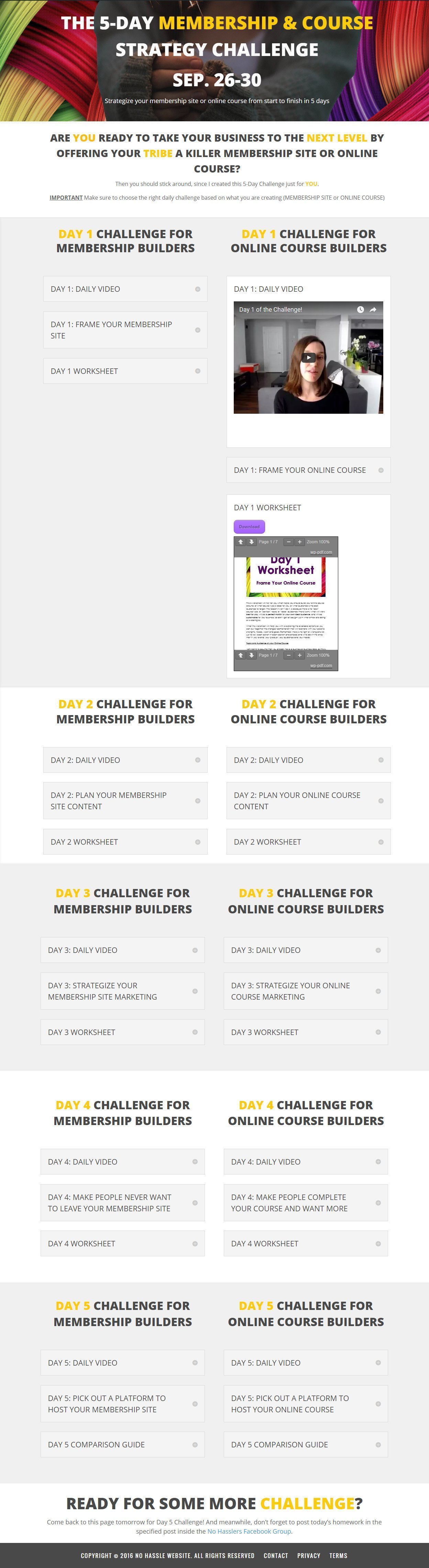
The Sign-Up Page
I believe much of the success of the launch is due to the Facebook ad but also to the sign up page. It was a long sign up page, not one of these opt-in-box-only kinda sign up pages! I wanted the right people, I wanted engaged and committed people, and I wanted them to know what they are getting themselves into when they sign up.
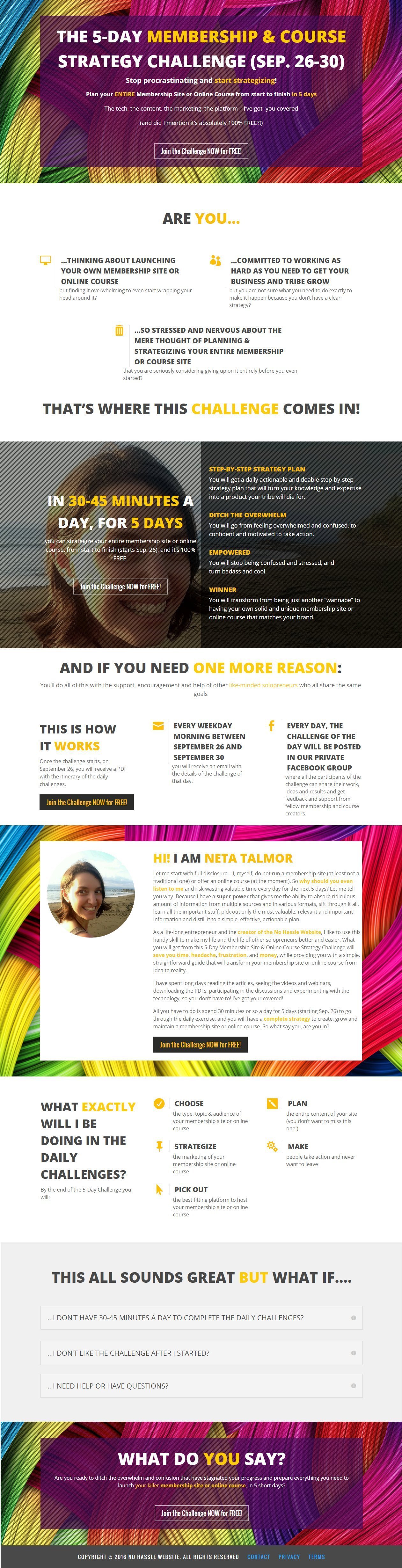
According to Google analytics – my sign up page had 401 unique page views and, 274 signed up –> 68% conversion!!!
From the referral giveaway – 174 unique page views, 46 signed up –> 26% conversion.
Final Challenge Numbers
274 people signed up for the challenge, and 46 more came through the referral giveaway for a total of 320 people. The key was to get them not only on the mailing list but also into the special Facebook group I created for the challenge, where all the action was going to take place. I ended up getting over 250 into the Facebook group (almost 80% of the people who signed up), by encouraging them to join in the thank you page and in the welcome email.
If I take the total amount I spent on sign ups (USD$850) and divide it by the total number of sign ups, free and paid (320), I get a cost of $2.65 per sign up. Not bad!
The Challenge Page and Facebook Group
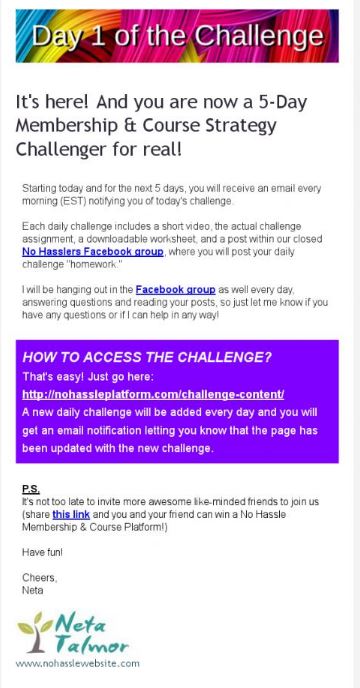
Each day the challenge takers got an email in the morning letting them know the new daily challenge is available on the Challenge Page, and a paragraph about what the daily challenge is all about.
Each day of the challenge, I added a new challenge to the Challenge Page, that included a daily video (which I recorded every day to talk about the previous day’s challenge and what the new challenge is about), details of the challenge of the day, a downloadable PDF worksheet, and a link to post the daily homework inside the challenge Facebook group.
Emails
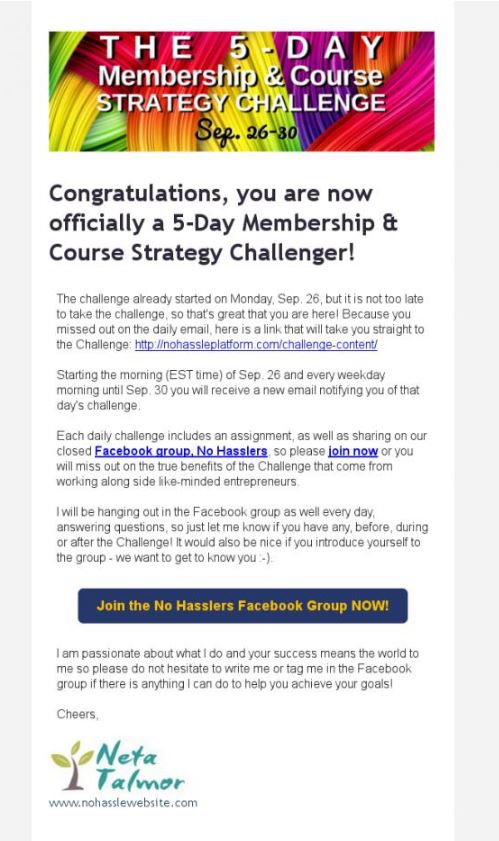
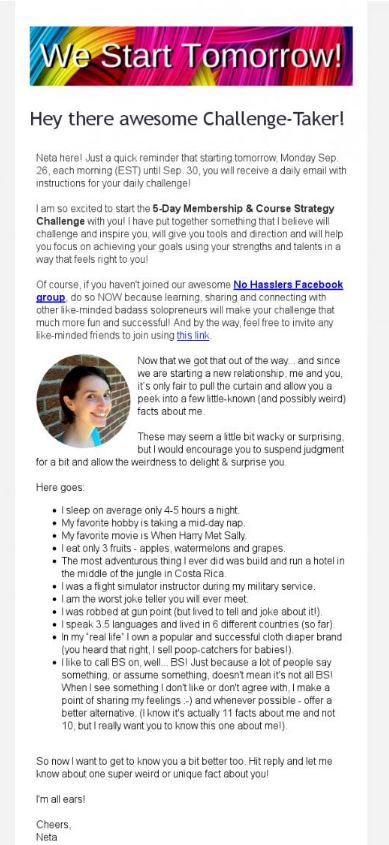
Once people signed up for the challenge they got a welcome email and then another one just 1 day before the challenge started, as a reminder. After that, they got the daily email for the daily challenge, during the 5 days of the challenge.
On Day 4 I let them know by email and in the group that there would be 2 live webinars on the following (and last) day of the challenge that will include a recap of the 5 days (this was useful for anyone who couldn’t complete all the daily challenges or wanted an overview), a live demo of my product, fast-action bonuses and a live giveaway. The reason I did 2 webinars was because I had a lot of challenge takers from North America and Europe but also from New Zealand and Australia, and I wanted to give everyone a chance to attend live.
Launch Trigger
The launch trigger is the event that triggers the opening of the cart. In my case it was the first of the 2 live webinars. After I did the summary of the 5-day challenge and a live demo of my product, I officially opened the cart. I offered a few fast-action bonuses and also did the live giveaway at the end, which made sure people stayed until the end of the webinar.
I had 4 points of urgency during the launch and 3 bonuses. People who bought early, got all the bonuses that came after as well:
1. Buy before the end of the live webinar – get bonus #1
2. Buy by the end of the following day – get bonus #2
3. Surprise mid-launch bonus: buy by the end of the day before last – get bonus #3
4. Doors close

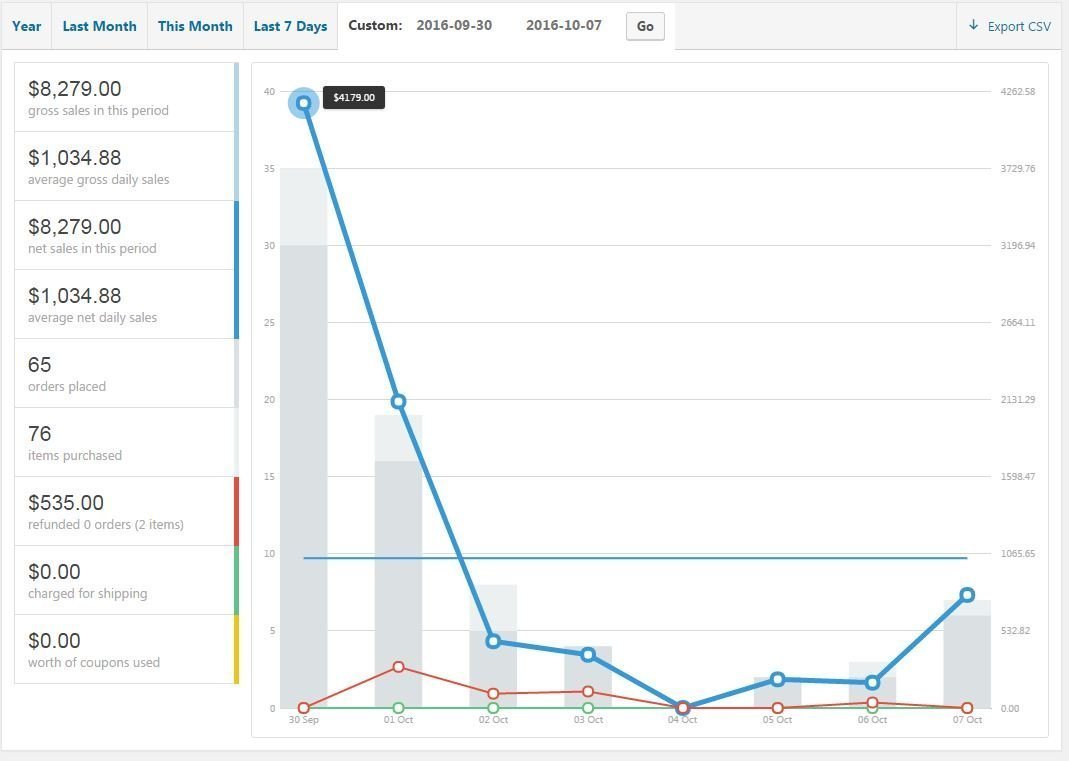
Total Sales: $8279 from 65 buyers
As you can see in the image below, half of the sales (over $4179) happened during the first 24 hours, when bonus # 1 was still available and by the end of bonus #2, 75% of the sales already occurred.
I sent some emails during the 8 days following the launch trigger, to invite them to the webinars, links to the replays, reminder of the fast action bonuses expiring etc. Overall I did not bombard them with emails, and my nudges were relatively gentle and non-aggressive.
Expectations vs. Reality
I was COMPLETELY WRONG with my predictions!!!
What I expected: originally I expected a cost per paid sign up of $2-4, and a conversion from sign up to buyers of only 2-6%. Based on those numbers I was ready to spend $4000-$5000, get 1500-2000 sign ups and convert 2-6% of them into buyers which meant either losing some money (if the costs per sign up was on the high end and the conversion to buyers was on the low end), or making $3500-12000 if the cost per sign up was lower, and the conversion was 6%.
What actually happened: Once I decided to do the challenge, my original plan was to start early with the ads, with about $50/day, so I can test them and nail the best ad/audience, and then increase it significantly for the last 5-6 days. However, I increased it to $200 or so for a couple of days, and barely saw any difference in the total number of daily sign ups! It was a total waste of money! I think my audiences were pretty narrow, so spending more money just meant spending more money on the same people as I did with the $50, and I won’t be getting more sign ups that way. This is why I ended up spending “only” CAD$1099 (USD$850), and signing up “only” 320 people in total (with paid ads and free marketing).
However, I was wrong again with my estimation of the conversion to customers! I thought 6% conversion from sign ups to buyers would be excellent, but I ended up converting at 20% (65 orders out of 320 sign ups –> 20%). And, many more people than I expected bought my more expensive offer ($185 which was a combo of my evergreen product and the launch product). That meant that at the end I had sales of $8279 and expenses of $850, for a total of $7429. I was never so happy to be so wrong!
Even more than the money, it was the fact that the launch really “worked” that made me so happy and excited: I got people to join my challenge; I was then able to engage with them and give them extraordinary value in a short time, demonstrating my passions, talents and personality; I created a natural transition to my product without being icky or salesy; and people got excited to buy the product, making me feel like I did them a favor allowing them to buy it!
Conclusions
I attribute the success of the launch mainly to the following factors:
1. While I did not have a list per-se, or a big following, I was in business for a few months before the launch, I was known enough to create some kind of momentum within the groups I am active in and among my existing clients. Without this core audience and reputation I couldn’t create any traction. Conclusion –> spend a few months giving value in groups, increasing your visibility, giving your product/service for free so you have customers and testimonials etc.
2. The challenge – the challenge was a perfect connector between my ideal audience and myself. I was able to identify a true pain point and a solution that resonated with people who haven’t even ever heard about me, but decided to sign up as they really needed what the challenge offered, and once they did the challenge, they got to know me. Conclusion –> identify something your ideal customer must have now, use that to attract them to you, and engage with them over a period of a few days to build trust.
3. The Facebook ad and sign up page for the challenge – despite the cost per conversion being much higher than I expected, I could see the ad was working as I was getting a steady stream of sign ups and I knew if they do the challenge they will love it. Conclusion –> don’t be afraid of ads that covert for $4-8, if you created a great opt-in offer (in my case it was the challenge) and a killer sign up page that naturally attracts the right people (people who know that they are getting into and will be engaged and committed, and therefore more likely to convert to customers). Of course, you have to make sure that your ROI will still make sense.
4. The product – none of this would lead to sales if the product isn’t good and/or isn’t a natural next step to everything that comes before it during the launch. In my case, I believe my product sells itself once people are exposed to it and get to know me, so the main challenge is to get it in front of as many people as possible, and to build trust so they believe the product can do what it says it does, and believe that they can do it. Conclusion –> don’t offer something that is just OK or that is offered by others. Create something that is extraordinary and truly makes a difference.
I hope all this information was valuable, entertaining, and even inspirational to you. If it was, feel free to click on the share buttons and spread the love! <3 Neta